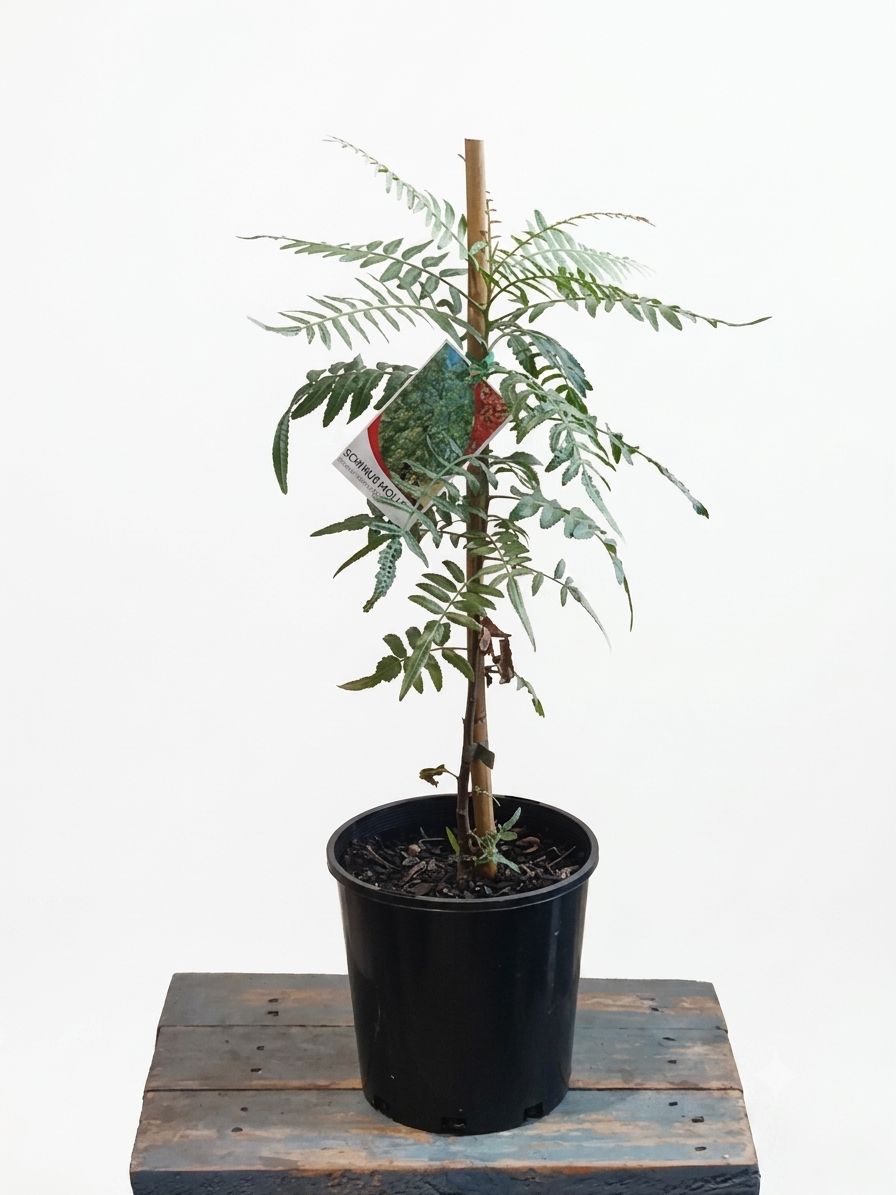
Pepper Corn Tree
AU$25.00
Price incl. GST (10%) AU$2.27
In stock: 2 available
Product Details
Botanical Name: Schinus molle
Common Names: Pepper Corn Tree, Peppercorn Tree, Peruvian Pepper
The Peppercorn Tree is a hardy, fast-growing evergreen that handles tough conditions with ease. It features beautiful weeping branches and fine, fern-like leaves that release a spicy aroma when crushed. It is highly valued for its striking looks and the clusters of bright pinkish-red berries that hang from its branches.
Features:
Ideal prune height range: 4-8m
pH growing conditions: 6.0 to 8.0
Shade or full sun: Full sun
Minimum pot year 5: 90L pot
Time to fruit age: 3-5 years
Peppercorn trees are incredibly resilient and handle heat, drought, and poor soils like a champion. They form a beautiful gnarled trunk as they age, adding heaps of character to any landscape. While they love a sunny spot with well-drained soil, they need very little attention once their roots are established.
Interesting Notes:
The dried pink berries are often used as pink peppercorns, offering a mild, sweet, and peppery flavor for your kitchen creations. See below for preparation instructions.
It is also a fantastic shade tree that brings a classic, rustic feel to larger backyards or lifestyle blocks.
Limited stock. Pickup from Parkwood, WA. Delivery to Perth Metro only.
Keywords: Schinus molle, Peppercorn tree, pink peppercorns, hardy shade tree, aromatic backyard tree
Clay Tolerance
Peppercorn trees are highly adaptable and will grow in clay soils without a worry. They tolerate poor drainage and heavy ground much better than most fruit trees, though they still prefer a spot that doesn't stay completely waterlogged for long periods.
Medicinal Studies
This tree has a long history in traditional medicine for treating wounds and infections. Modern scientific studies have looked closer at its properties:
Antimicrobial and Antioxidant: Research shows the essential oils in the berries and leaves have strong antibacterial and antifungal actions.
Cytotoxic Properties: Lab studies have tested methanol extracts from the fruits against certain human cancer cell lines, showing they can significantly decrease cancer cell viability in vitro.
Mental Health: Early animal studies on mice have also provided support for potential antidepressant effects.
Potentially unsafe for livestock.
Human safety
To prepare pink peppercorns safely for eating, you must dry them out completely and use them in small amounts.
First, harvest the bright red berries when they are fully ripe. Wash them well in clean water to remove any dirt or sticky sap, then pat them dry with a towel.
Next, spread the berries in a single layer on a tray. You can dry them in a food dehydrator or leave them in a warm, dry spot out of the sun for a few weeks until they are completely brittle.
Once they are dry, gently rub the berries to remove the thin papery outer skins, leaving just the little seed inside.
Store the dried seeds in an airtight jar. Only use them sparingly as a spice mixed with regular black peppercorns, and do not eat them raw or in large quantities.
Save this product for later
Customer reviews
Reviews only from verified customers
No reviews yet. You can buy this product and be the first to leave a review.
Have questions?
Pepper Corn Tree
Display prices in:AUD