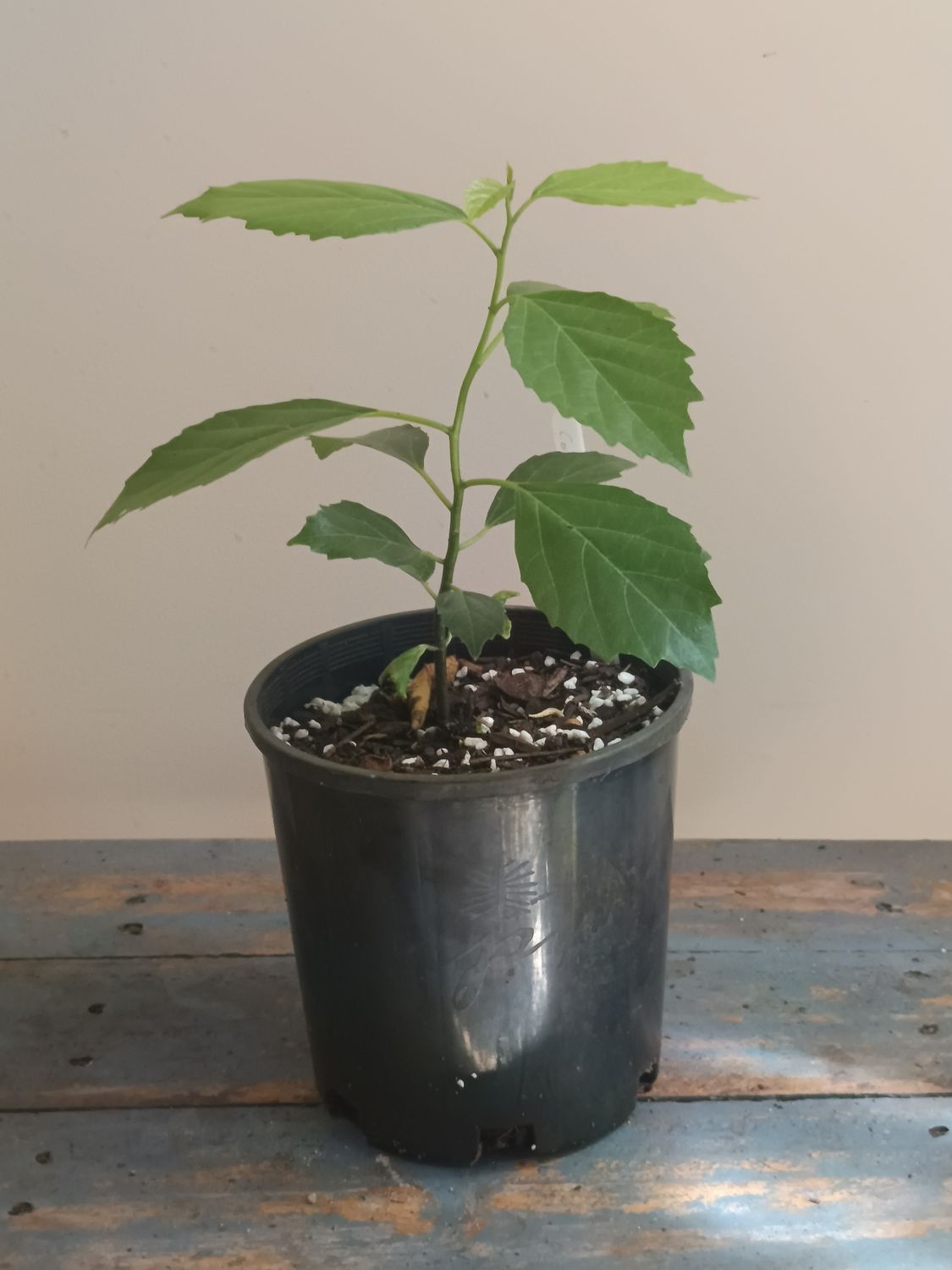
Glue Berry
AU$55.00
Sold out
Price incl. GST (10%) AU$5.00
Sold out
Product Details
Botanical Name: Cordia dichotoma
Common Names: Glue Berry Tree, Indian Cherry, Clammy Cherry, Snotty Gobbles
The Glue berry tree is a versatile, fast-growing tree native to parts of Northern Australia and Southeast Asia.
In Australia, it is famously known as the "Glue Berry Tree" because of the incredibly sticky, gelatinous pulp found inside its pink or yellow berries. While the fruit is edible and often used in Asian pickles, the "glue" is so effective it has traditionally been used as a natural adhesive.
Features
Ideal Prune Height: 4–6m (can reach 12–25m if left unpruned).
pH Growing Conditions: 6.0 to 7.5 (prefers deep, moist sandy loams).
Shade or Full Sun: Full sun is best for mature fruiting specimen, but it is moderately shade-tolerant.
Minimum Pot Year 5: 75L–100L (it has a spreading crown and deep roots).
Time to Fruit Age: 4–5 years from seed.
Cultivation
This tree is very hardy and well-suited to tropical and subtropical regions, including Perth. It prefers moderate water but is relatively drought-tolerant once established. Young seedlings can be a bit sensitive to frost and very intense direct sun, so it is a good idea to protect them for their first few seasons. It is deciduous, meaning it will lose its broad, shiny leaves during the cooler months before flushing with new growth and white, fragrant flowers in summer.
Uses & Notes
Edible: Ripe fruits can be eaten raw, while immature green fruits are popular for pickling (often called Gunda or Lasoda in Indian cuisine).
Wildlife: The tree is a magnet for birds and butterflies, particularly the Common Oakblue Butterfly in natural habitat.
Utility: The sticky pulp is a fun "natural glue," and the durable timber has been used for boat building because it holds up well in water.
Limited stock. Pickup from Parkwood, WA.
Delivery to Perth Metro only.
Keywords: Glue Berry Tree, Cordia dichotoma, Indian Cherry, edible fruit Perth, fast-growing shade tree.
Save this product for later
Customer reviews
Reviews only from verified customers
No reviews yet. You can buy this product and be the first to leave a review.
Have questions?
Glue Berry
Display prices in:AUD